
250W, 500W, 750W the numbers are right there on the spec sheet, and they tell you almost nothing on their own. What actually matters is matching motor wattage to your terrain, your weight, and the way you actually ride. This is the honest, no jargon guide to getting that match right the first time.
Here is the mistake that sends riders back to the returns desk: buying the highest wattage motor available because it seems like the safest choice. More power is always better, right? Not exactly. A 750W motor on a flat city commute is like driving a truck to pick up groceries , the capability is there, but you are carrying weight and spending battery you do not need. And a 250W motor on a steep hill climb with a loaded pannier rack is going to leave you pedaling harder than you bargained for, wondering where the assist went.
Motor wattage is not a prestige metric. It is a matching problem. The right wattage is the one that fits your actual riding conditions and this guide will show you exactly how to find it.
What E-Bike Motor Wattage Actually Means
Wattage measures the rate at which a motor consumes electrical power. A 500W motor draws 500 watts of power when running at full capacity. But here is the detail most spec sheets bury: the rated wattage is the continuous output the power the motor can sustain indefinitely without overheating. Peak wattage is higher, delivered in short bursts for acceleration and steep climbs.
This distinction matters in practice. A 750W motor may briefly peak at 1000W that extra surge makes a noticeable difference when starting from a stop or tackling steep inclines. When you see a motor described as "500W peak / 750W nominal," the nominal figure is what you can rely on across a full ride. The peak is what you get for a few seconds when you need it most.
Wattage also interacts with voltage and torque in ways that affect real-world performance more than the watt rating alone. Two bikes with the same watt rating can feel completely different because of controller tuning, torque output, battery voltage, sensor type, gearing, and total bike weight. Torque measured in Newton meters (Nm) is particularly important for hill climbing. A motor with high torque and moderate wattage will outperform a high-wattage, low-torque motor on steep terrain. We will come back to this.
The Two Motor Types: Hub vs Mid-Drive
Before getting into wattage levels, it helps to understand the two fundamental motor configurations because they affect how wattage translates into real-world performance in very different ways.
Hub Motors
Hub motors are mounted directly in the center of the front or rear wheel. They are simpler, more affordable, and require less maintenance than mid-drive motors. For flat to moderately hilly terrain, a quality hub motor is entirely capable and represents excellent value. Hub motors are cheaper and simpler, but less efficient on hills and with fat tires due to drag. On a flat city commute, that inefficiency is negligible. On a sustained climb, it becomes noticeable.
Mid-Drive Motors
Mid-drive motors are mounted at the bottom bracket the center of the bike's frame where the pedals attach. This central placement gives the motor access to the bike's gearing system, which dramatically improves efficiency and hill-climbing performance. Mid-drive motors use gears for efficiency and torque multiplication a 500W mid-drive equals a 750W hub motor on a 10% grade. This is the key insight: if you are comparing a 500W mid-drive to a 500W hub motor, they are not equivalent on hills. The mid-drive will feel significantly more powerful.
For city commuting and flat terrain, a hub motor at any sensible wattage is the practical, cost-effective choice. For trail riding, hilly terrain, or cargo use, a mid-drive motor justifies its higher price with meaningfully better performance.
250W Motors: Who They're For
250W motors are usually found on lightweight and foldable e-bikes efficient, quiet, and compliant with strict regulations. In the European Union and the United Kingdom, 250W is the legal maximum for a pedal-assist e-bike to be classified as a bicycle rather than a moped. This is why most European commuter e-bikes use 250W motors it is not a limitation so much as a regulation-driven design choice.
A 250W motor delivers adequate gentle assistance on flat terrain with good legal compliance, reaching speeds of 15–20 mph on level ground. For the right rider in the right conditions, that is entirely sufficient. For the wrong rider or the wrong terrain, it is where frustration begins.
250W is the right choice if:
- You ride primarily on flat roads and bike paths with minimal elevation
- You are a lighter rider (under 170 lbs) without regular cargo
- You are in the EU or UK, where 250W is the standard legal limit
- You prioritize maximum range and battery efficiency over raw power
- You want a lightweight, foldable e-bike for urban commuting or last-mile travel
250W will disappoint you if:
- Your route includes any significant hills or sustained inclines
- You regularly carry cargo, panniers, or a child seat
- You are a heavier rider who needs sustained motor support
- You want confident acceleration from traffic lights
The honest verdict: If you live in a hilly area or carry cargo, 250W may feel sluggish you will likely work harder, especially on inclines. For flat city riding with a light load, it is clean, efficient, and entirely capable.
500W Motors: The Versatile Middle Ground
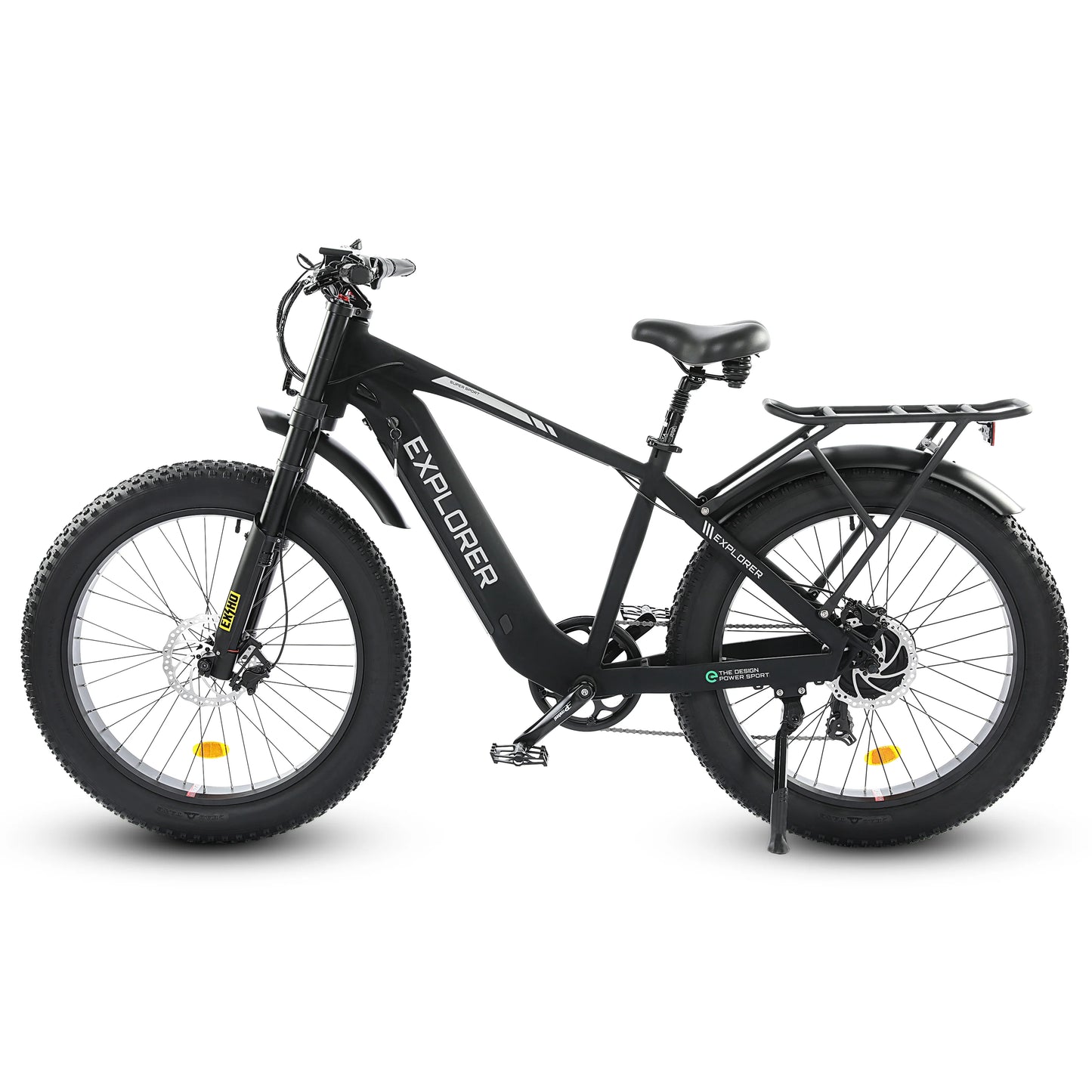
For many commuters and casual riders, 500W is enough for flat to moderate terrain. It is the most versatile wattage category capable enough to handle moderate hills and occasional cargo, efficient enough for solid range, and affordable enough to be the standard choice across a wide range of quality e-bikes.
A 500W e-bike motor can produce a top speed of 20 mph and roughly 45 Newton meters of torque when operating at full power a steep gradient can be easily climbed at this speed. In practice, 500W handles most real-world riding conditions that fall between "perfectly flat city streets" and "serious off-road trail riding." It is the workhorse of the e-bike motor category for good reason.
The 500W motor is also the sweet spot for US riders who want capable hill performance without crossing into the higher-cost, heavier 750W category. The more potent 500W motor is intended for riders who desire greater assistance when pedaling riders who take on challenging courses with obstacles also use it.
500W is the right choice if:
- Your commute includes moderate hills and mixed terrain
- You are an average-weight rider (150–220 lbs) with occasional light cargo
- You want a versatile bike that handles both city streets and light trails
- You want confident acceleration in traffic without the weight penalty of 750W
- You are looking for the best balance of power, range, and price
500W will disappoint you if:
- You are a heavier rider (220 lbs+) tackling steep or sustained climbs regularly
- You are riding with a full cargo load or a child trailer
- Your terrain is genuinely off-road, loose surfaces, steep descents, technical trails
The honest verdict: For most riders in the US, a 500W to 750W electric bike offers the best balance of power, comfort, hill climbing, and everyday versatility. If you are between 500W and 750W and your riding is mostly on pavement with moderate hills, choose 500W. You will not miss the extra wattage, and you will appreciate the range.
750W Motors: When You Need Serious Power
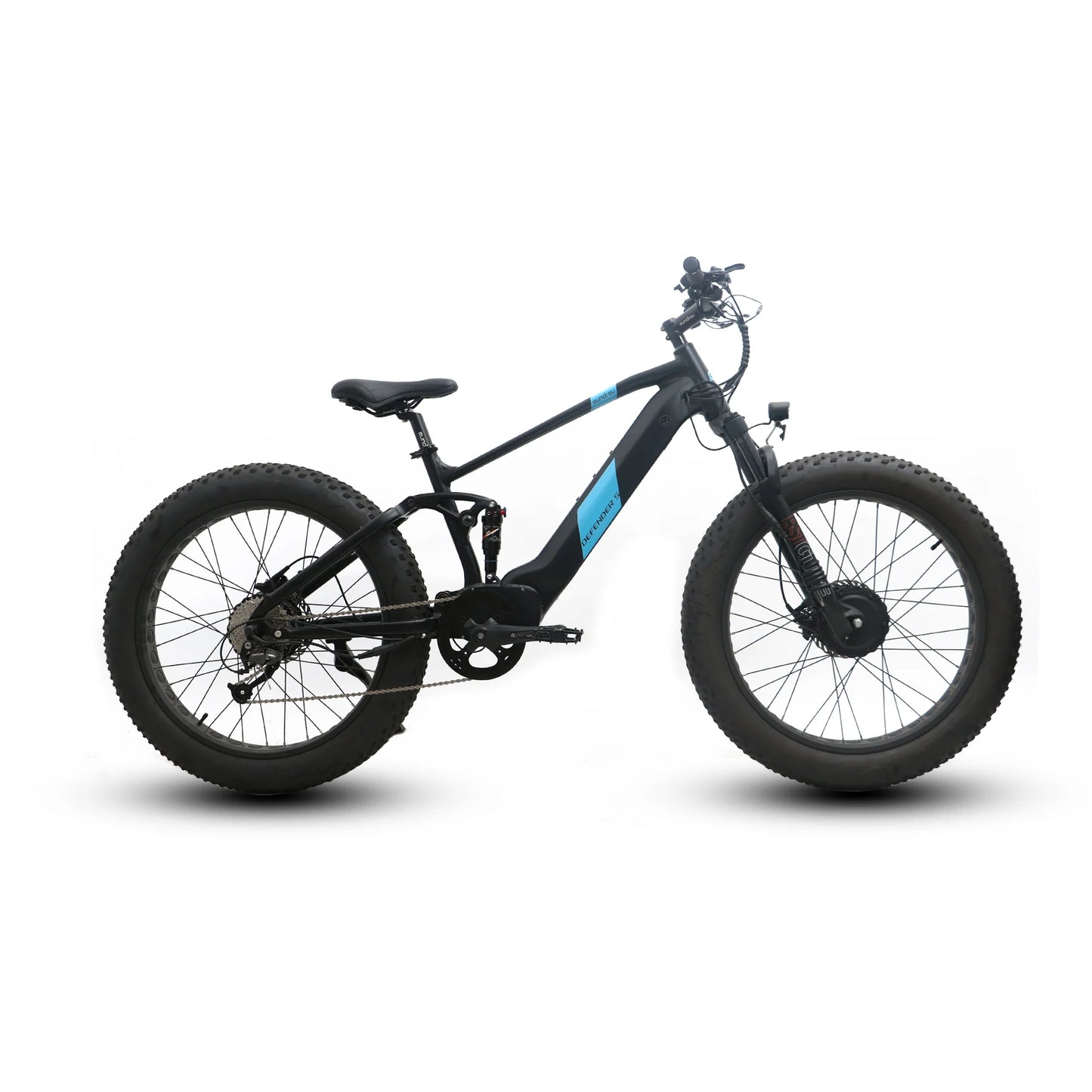
A 750W e-bike motor can provide 75 Newton meters of torque and a top speed of 28 mph when operating at full power . It is ideal for handling challenging off-road terrain with lots of hills. In the United States, 750W is the maximum legal wattage for a Class 3 e-bike (28 mph pedal-assist), making it the highest-powered option available for street-legal riding in most states.
Where 750W genuinely earns its premium is on demanding terrain. Steep climbs require sustained torque a 750W motor handles these conditions confidently, maintaining speed without stressing components. For riders who regularly tackle serious hills, carry substantial cargo, or want to ride fat-tire or trail bikes with genuine capability, the step up to 750W is not luxury it is a necessity.
It is also worth noting the legal landscape: in the EU and UK, 750W motors exceed the 250W legal limit for standard e-bikes and would classify the bike as a moped requiring registration. In the US, 750W is legal for Classes 1–3 across most states. If you are in Europe, check your local regulations before purchasing a 750W model.
750W is the right choice if:
- Your terrain includes steep or sustained hills that you want to climb without effort
- You are a heavier rider (220 lbs+) who needs consistent motor support
- You ride trail, mountain, or fat-tire bikes on genuinely off-road surfaces
- You regularly carry heavy cargo, a child seat, or tow a trailer
- You want maximum acceleration and top-end speed within legal limits
- You are in the US and want the most capable street-legal motor available
750W will be overkill if:
- Your riding is almost entirely flat, urban or suburban commuting
- You are a lighter rider on moderate terrain
- Range is your primary concern ,750W motors consume battery faster
- Weight matters ,750W motors and their larger batteries add meaningful weight
The honest verdict: For most riders, 750W offers the best balance when terrain is genuinely demanding. But if your honest answer to "how hilly is my route?" is "moderately hilly," you probably do not need 750W. The 500W motor will handle it, cost less, and give you a better range.
What About 1000W and Above?
Motors rated at 1000W and above exist and deliver extraordinary performance but they come with important legal caveats. The fastest-rated motors are 1000W and 1500W, but since most US states do not allow e-bikes that run faster than 20–28 mph, you are better off with a 500W or 750W electric bicycle for road use. In most US states, a 1000W motor reclassifies the bike as a motor vehicle requiring registration, insurance, and a license.
The only six US states that allows 1000W motors on public roads and trails are Georgia, Kansas, Minnesota, Oklahoma, Oregon, and Virginia . If you are riding exclusively on private property or in states where higher wattage is permitted, 1000W motors offer compelling performance for cargo hauling, heavy riders, and extreme terrain. For everyone else, 750W is the practical ceiling for street-legal riding in 2026.
The Torque Factor: Why Nm Matters More Than W on Hills
One of the most important and least discussed aspects of e-bike motor selection is torque and it matters more than wattage for hill climbing performance. Torque often matters more than riders expect , watts explain overall power output, while torque better explains hill climbing strength and acceleration.
Torque is measured in Newton meters (Nm) and describes the rotational force the motor applies to the wheel. On a flat road, moderate torque is sufficient. On a steep climb, torque is what keeps you moving without slowing to a crawl. A motor with 80Nm of torque will climb better than a motor with 40Nm, even if both are rated at 500W.
When reading spec sheets, look for both the wattage and the torque figure. For commuting and flat terrain, 40–55Nm is typically sufficient. For hills and trail riding, look for 60Nm minimum and ideally 75Nm or above. Mid-drive motors generally produce significantly higher torque than hub motors of equivalent wattage another reason they dominate the trail and hill-climbing category.
Quick Reference: Wattage by Rider Type
|
Rider Type |
Terrain |
Recommended Wattage |
Motor Type |
|
Urban commuter, light rider |
Flat city streets |
250W–350W |
Hub motor |
|
Urban commuter, average rider |
Flat to moderate hills |
500W |
Hub motor |
|
Suburban commuter, mixed terrain |
Moderate hills, some cargo |
500W–750W |
Hub or mid-drive |
|
Heavy rider or cargo hauler |
Any terrain |
750W |
Hub or mid-drive |
|
Trail/mountain rider |
Off-road, steep climbs |
750W+ |
Mid-drive |
|
EU / UK legal compliance |
Any paved terrain |
250W max |
Hub motor |
Three Questions to Answer Before You Buy
1. What is the hilliest part of my regular route?
Terrain is one of the most overlooked factors when deciding how powerful an e-bike motor you need. On flat terrain, lower-watt motors perform surprisingly well a 250W or 500W motor can maintain consistent speeds without strain. But rolling hills change everything. Be honest about your actual route. If you have one significant hill on a ten-mile commute, that hill is the constraint not the flat nine miles around it.
2. What is my total riding weight?
Total riding weight means you plus your gear, cargo, and anything else the bike regularly carries. Heavier riders, strong headwinds, or steep hills may benefit from more power or higher torque. If your total riding weight regularly exceeds 220 lbs, size up. The motor that handles your weight comfortably will last longer and deliver better range than one that is consistently working near its limits.
3. Where will I ride most pavement or trail?
If the honest answer is pavement, a hub motor at 500W will serve you excellently. If the honest answer is true, get a mid-drive at 750W and do not compromise on the motor type. The terrain you actually ride, not the terrain you imagine yourself riding, is the specification that matters.
The Bottom Line
More wattage is not better wattage. Right wattage is better wattage. A commuter riding flat streets may be perfectly happy with 250W, while someone climbing steep hills or carrying cargo will benefit meaningfully from 750W. The gap between those two riders is not about ambition it is about terrain, weight, and how the bike actually gets used.
Match your motor to your ride, not to the spec sheet ceiling. Choose hub for pavement, mid-drive for hills and trails. Look at torque alongside wattage. And buy for the route you actually ride three times a week, not the mountain trail you plan to tackle once in the spring.
Browse our full range of e-bikes at ebikecollection.com filtered by motor wattage, terrain, and rider type and find the one built for your ride.
Still unsure which motor wattage fits your situation? Drop your question in the comments .Describe your terrain, your weight, and your typical ride, and we will give you a straight answer.